From AI Literacy to AI Capability: What South African SMMEs Really Need
Jul 14
South African entrepreneurs do not need another presentation telling them that artificial intelligence is changing the world.
Many SMME owners already know about ChatGPT, automation and AI assistants. Some use AI to write social media posts, improve emails or generate ideas. This is useful, but it is only the beginning.
Knowing what AI is does not mean a business can use it productively.
"There is an important difference between AI literacy and AI capability."
Knowing what AI is does not mean a business can use it productively.
There is an important difference between AI literacy and AI capability.
AI literacy means understanding what AI can do, where it may fail and why it must be used responsibly. AI capability means applying that understanding to real business activities, such as handling enquiries, preparing quotations, organising customer information and reducing repetitive administration.
A business owner may know how to ask AI to draft a quotation. But if customer information is scattered across WhatsApp messages, notebooks, emails and spreadsheets, the quotation process will remain slow and inconsistent.
"AI cannot fix a workflow that the business has never properly understood."
The real gap is practical capability
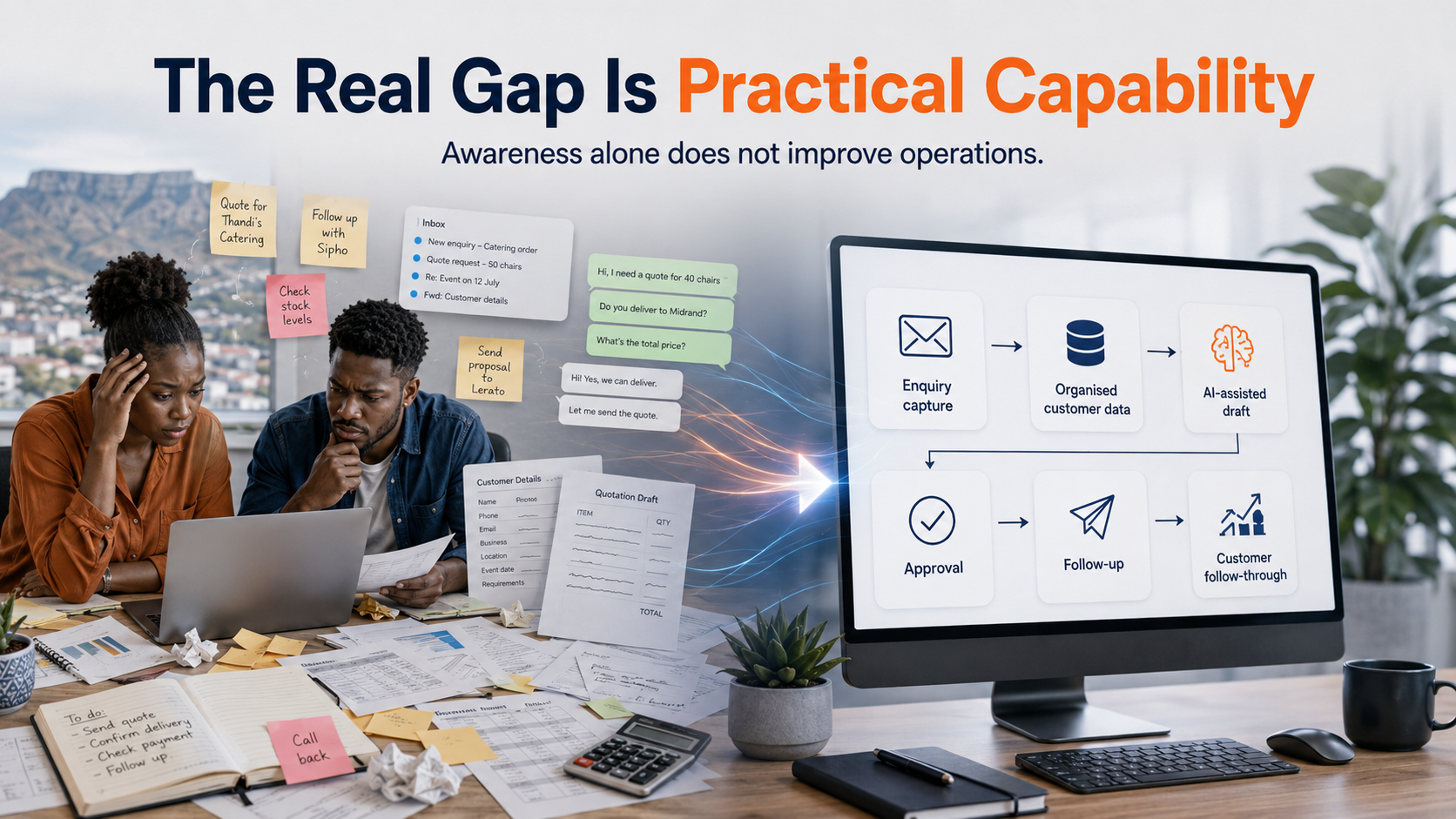
The challenge facing many South African SMMEs is not simply a lack of awareness. It is a lack of practical skills, organised information and operational capacity.
For example, using an AI tool to write a customer response is relatively easy. Building a reliable process that captures the enquiry, stores the information, prepares a draft response, sends it for approval and schedules a follow-up requires a broader set of capabilities.
These capabilities do not require advanced coding or a large technology team. They require structured business thinking.
What SMMEs need to learn
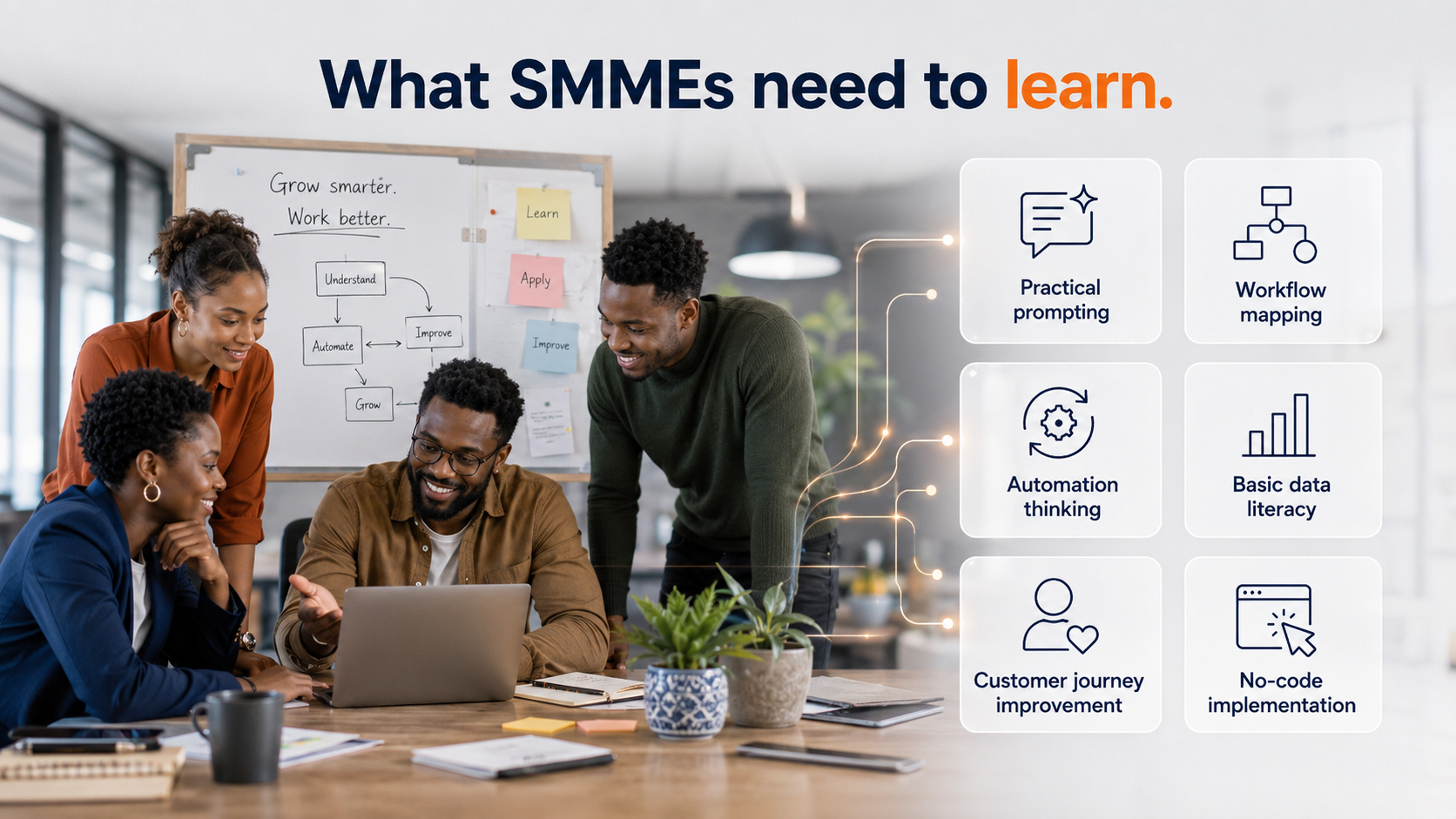
Practical Prompting
Prompting should not be taught as a collection of secret phrases. A useful prompt gives the AI clear context, instructions and boundaries - for example, confirming an enquiry, asking for photos and an address, and not promising a final price until information has been reviewed. SMMEs need reusable prompts for recurring work: customer replies, proposals, meeting summaries, follow-ups and feedback analysis.
Workflow Mapping
Before automating a process, a business must understand how the work currently moves. A single enquiry may pass through a website form, an email inbox, a spreadsheet, a WhatsApp message and a quotation template and every handover creates an opportunity for delays, errors or lost information. A simple map should show what starts the process, what information is required, who is responsible, where decisions are made, what can be automated and where human approval is needed.
Automation Thinking
Automation thinking means identifying repetitive work that follows predictable rules - acknowledging enquiries, creating customer records, requesting missing information, sending reminders and updating quotation statuses. Not every task should be automated: pricing decisions, unusual requests, complaints and contractual commitments still need human judgement. The goal is to remove unnecessary copying, waiting and chasing - not people.
Basic Data Literacy
AI depends on information. If that information is incomplete, duplicated or outdated, the results will be unreliable. SMMEs need to know what information they collect, where it is stored, who may access it and which version is correct. This can begin simply: one central customer list, consistent contact details, clear enquiry statuses and quotations linked to the correct customer.
Customer Journey Improvement
Businesses should not begin by asking “Where can we add AI?” They should ask “Where is the customer experiencing unnecessary friction?” AI and automation can help collect the correct information upfront, draft personalised responses, trigger reminders and make the next action clearer - improving the customer journey, not just making the internal process look advanced.
No-Code Implementation
No-code platforms let SMMEs connect forms, databases, email systems, calendars and AI tools without custom software. But easy-to-use tools can still produce badly designed systems - sending the wrong message, creating duplicate records or failing silently. SMMEs need to test workflows, monitor results, protect customer information and maintain a manual fallback.
From awareness to action
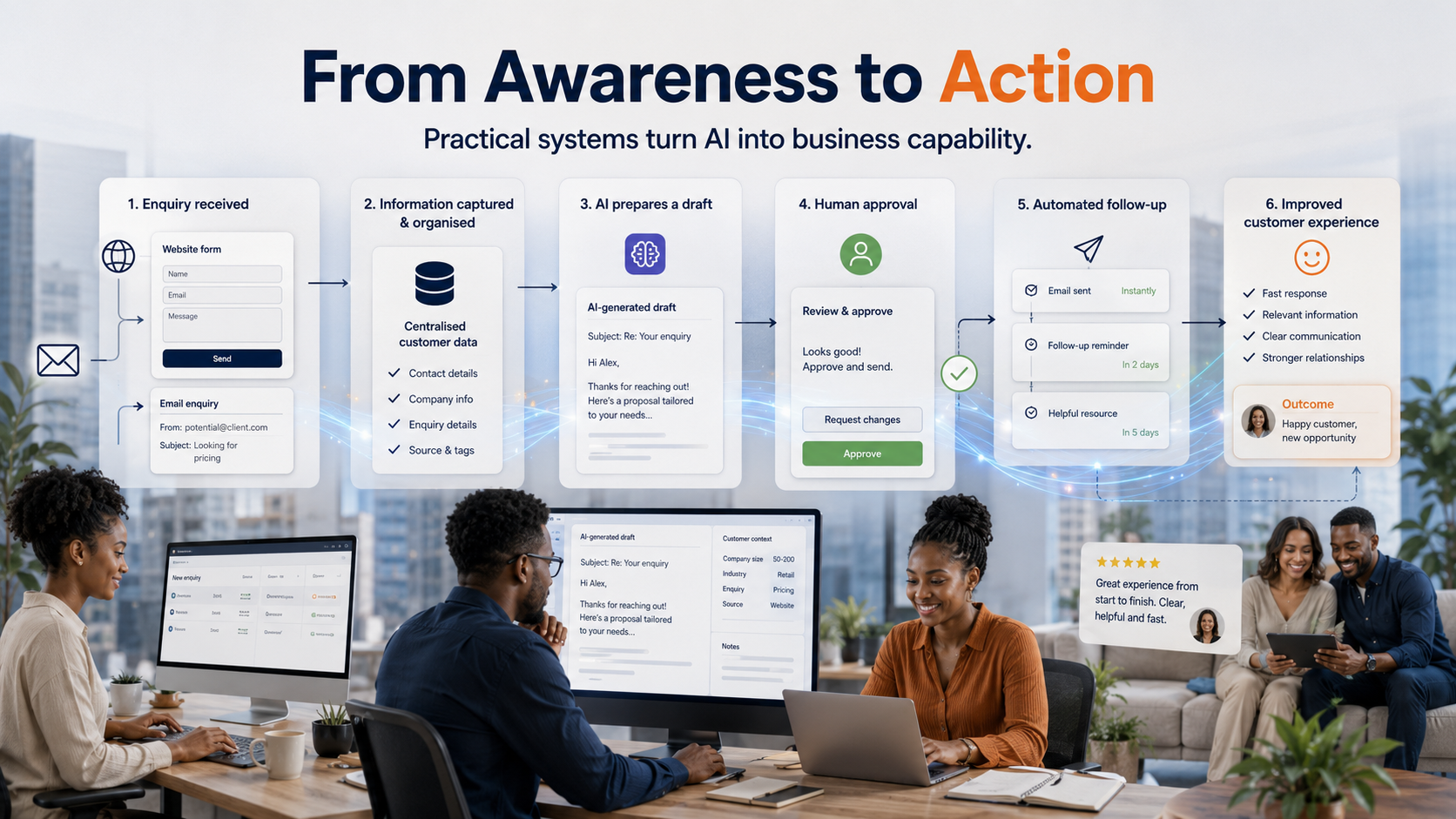
A practical AI programme should not end with participants saying, “That tool was interesting.” Each business should leave with something it can use:
-
One mapped business workflow
-
A small library of tested prompts
-
An organised source of customer information
-
One working no-code automation
-
A clear human approval point
-
A way to measure time saved or service improved
That is the shift from AI literacy to AI capability.
South African SMMEs do not need to become technology companies. They need the confidence and practical skills to make better technology decisions.
Ready to build smarter?
At Re|Mind Virtual Academy, we help micro and small business owners - especially those who’ve been left out of the tech conversation - build efficient, future-ready operations by combining timeless business fundamentals with modern tools like AI, automation, and no-code platforms.
No jargon. No tech background required. Just practical, structured learning that fits your life.
Explore our courses at remindvirtualacademy.com
Thank you!
Subscribe to our newsletter
Thank you!
Policy Pages
Copyright © 2026
Created with